
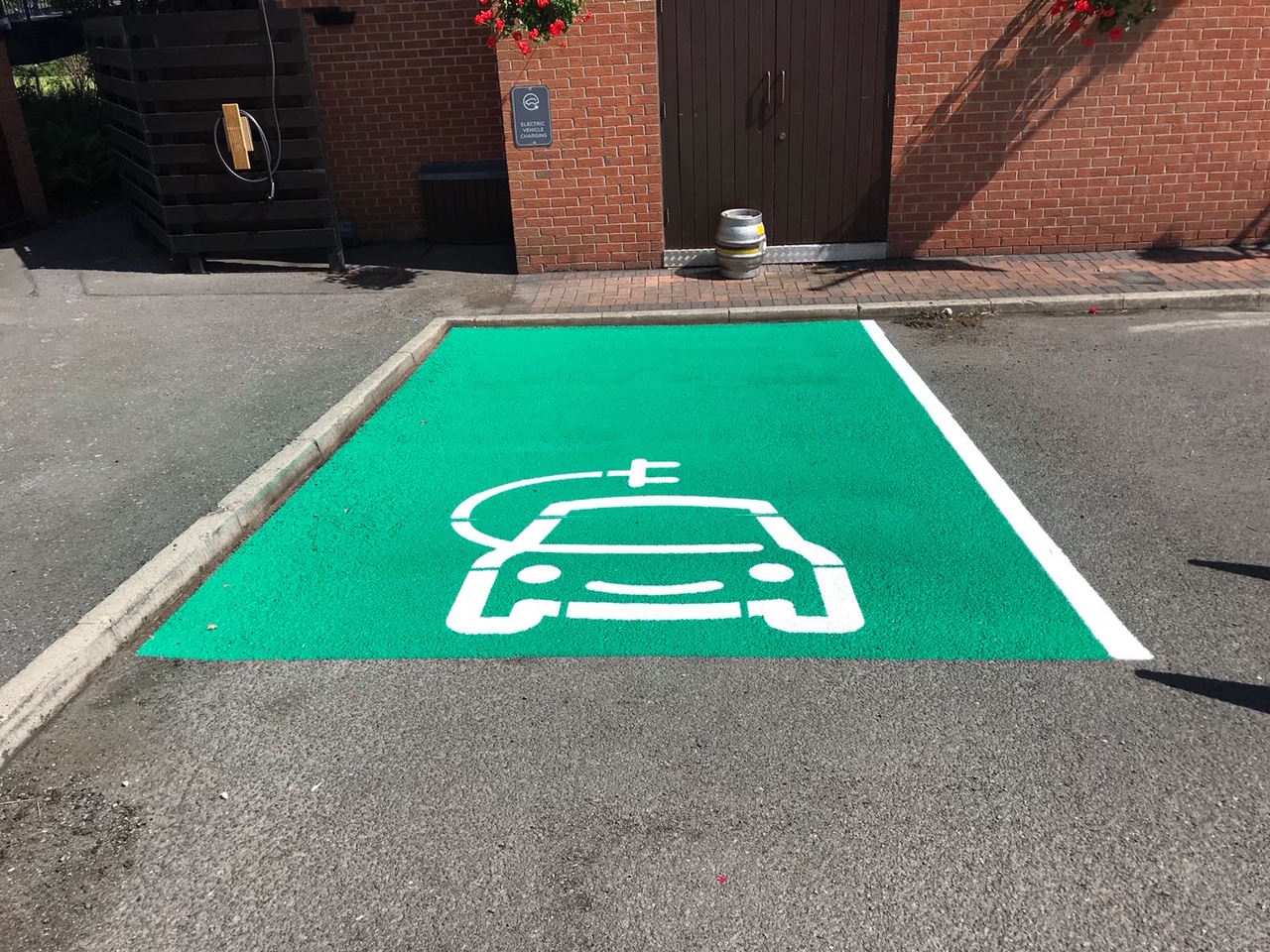
Layout, Markings And Safety Considerations For Businesses
Installing electric vehicle charging points is becoming an increasingly common requirement for commercial premises, schools, healthcare facilities, business parks and retail sites. However, many organisations focus solely on the charging equipment itself and overlook the wider car park layout that supports it.
Well-planned EV charging bay markings help drivers identify charging spaces quickly, improve traffic flow, support accessibility requirements and reduce the risk of misuse. They also help create a more organised environment for staff, visitors and customers.
As electric vehicle adoption continues to grow across the UK, businesses that take a strategic approach to EV charging infrastructure are often better positioned to meet future demand while maintaining a safe and efficient site.
What Do EV Charging Bay Markings Actually Do?
EV charging bay markings are visual markings applied to parking spaces reserved for electric vehicles using charging facilities.
Typically, these markings help:
- Clearly identify EV-only parking spaces
- Prevent non-electric vehicles from occupying charging bays
- Improve traffic flow within the car park
- Support accessibility and safety requirements
- Create a more professional and organised appearance
- Make charging facilities easier for visitors to locate
When combined with clear signage, they help ensure charging points are used correctly and efficiently.
Why Good EV Bay Planning Matters
Adding charging points without considering the wider car park layout can create problems that affect both drivers and site operators.
Common issues include:
- Vehicles blocking charging equipment
- Confusion over which bays are reserved for charging
- Pedestrian routes becoming obstructed
- Poor accessibility for disabled users
- Congestion around charging areas
- Limited space for future expansion
For many businesses, introducing EV infrastructure presents an opportunity to review their entire parking arrangement. This may include updating existing layouts, improving traffic flow and refreshing older markings.
Businesses considering wider parking improvements can find additional guidance on Gilvar Lining’s Car Park Markings page.
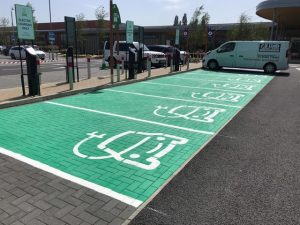
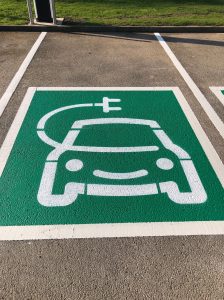
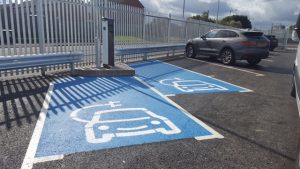
Choosing The Best Location For EV Charging Bays
The most obvious location is not always the most suitable.
Before installing charging points, it is worth assessing how vehicles and pedestrians currently move around the site.
Key considerations include:
- Proximity to building entrances
- Existing pedestrian walkways
- Access for disabled users
- Visibility from the main entrance
- Electrical infrastructure requirements
- Traffic flow patterns
- Future charging expansion
For example, placing charging bays directly beside a busy entrance may appear convenient but could increase congestion during peak periods. In some cases, positioning chargers slightly further away can create a safer and more efficient layout.
Markings And Colour Schemes For EV Charging Bays
One of the most common questions businesses ask is whether EV charging bays need special colours.
There is currently no single colour requirement for private commercial car parks. However, many organisations use green surfacing or coloured bay markings to distinguish EV spaces from standard parking bays.
A typical EV charging bay may include:
- EV symbols
- Clearly defined bay lines
- Directional arrows
- Charging point identification
- Keep-clear zones
- Pedestrian walkways
- Safety markings around charging equipment
The most important factor is consistency. Drivers should be able to recognise charging bays immediately without needing to interpret multiple marking styles.
The Importance Of EV Bay Signage
Markings alone are not always enough.
Signage provides additional clarity regarding how charging spaces should be used and can help reduce misuse.
Useful signage may include:
- EV charging only notices
- Time restrictions
- Charging instructions
- Accessibility information
- Directional signs from car park entrances
Using both signage and markings together creates a clearer experience for visitors and reduces the likelihood of disputes over parking spaces.
Accessibility Considerations For EV Charging Bays
Accessibility should be considered from the earliest planning stages rather than added later.
Some EV drivers may require additional space to safely access both their vehicle and the charging equipment. Designing accessible EV charging bays can help ensure facilities are suitable for a wider range of users.
Important considerations include:
- Additional side access space
- Clear routes between bays and facilities
- Charger positioning
- Surface quality
- Cable management
- Signage visibility
The British Standards Institution’s PAS 1899 guidance provides useful information on accessible public EV charging infrastructure.
Businesses operating public-facing facilities may also find relevant guidance through the Office for Zero Emission Vehicles (OZEV).
Managing Traffic Flow Around Charging Areas
EV charging bays can affect how vehicles move throughout a site.
Unlike standard parking spaces, charging bays often have longer occupancy periods, which can alter traffic patterns and create pressure on nearby routes.
When planning EV infrastructure, it is worth considering:
- Entry and exit routes
- Turning areas
- Queueing space
- Pedestrian crossings
- Delivery vehicle access
- Emergency access requirements
Good traffic management can improve both safety and user experience while reducing congestion during busy periods.
Where existing layouts no longer work effectively, line removal and redesign may be necessary before introducing new charging facilities.
More information about these services can be found within Gilvar Lining’s Services section.
Future-Proofing Your Car Park For Growing EV Demand
Many organisations begin with a small number of charging bays before expanding later.
However, failing to plan for future demand can result in expensive redesign work.
Questions worth considering include:
- Where could additional chargers be installed later?
- Will existing cable routes support expansion?
- Could staff and visitor charging eventually need separate areas?
- How will increased charging demand affect traffic flow?
- Are there enough accessible spaces available?
Building flexibility into the layout now can save significant disruption in the future.
Choosing Durable Materials For EV Charging Bay Markings
EV charging bays are often located in high-traffic areas and may experience regular vehicle movements throughout the day.
For this reason, selecting durable materials is important.
Common options include:
Thermoplastic Markings
A popular choice for external car parks due to their durability and visibility.
MMA Markings
Suitable for areas where a fast-curing and hard-wearing solution is required.
Specialist Surface Coatings
Can be used to create highly visible coloured areas, charging zones and safety markings.
Proper surface preparation is equally important. Existing contamination, damaged surfaces or faded markings can affect performance if not addressed before installation.
When Should EV Charging Bay Markings Be Refreshed?
Even high-quality markings will eventually deteriorate due to traffic, weather and general wear.
Signs that markings may need attention include:
- Fading colours
- Reduced visibility
- Outdated layouts
- Increased driver confusion
- Damaged surface coatings
- New charging equipment installations
Regular inspections can help maintain a professional appearance while ensuring the charging bays remain easy to identify.
Common EV Charging Bay Mistakes Businesses Should Avoid
Several issues appear repeatedly when organisations introduce EV charging facilities.
These include:
- Installing chargers without reviewing the wider layout
- Forgetting about pedestrian routes
- Leaving conflicting old markings in place
- Ignoring accessibility requirements
- Underestimating future demand
- Failing to use clear signage
Avoiding these mistakes early can help create a more efficient and user-friendly charging environment.
Frequently Asked Questions
Do EV Charging Bays Need Special Markings?
Yes. Clear EV charging bay markings help drivers identify charging spaces quickly and reduce misuse by non-electric vehicles.
Can Existing Parking Bays Be Converted Into EV Bays?
In many cases they can, although the surrounding layout, accessibility requirements and traffic flow should be assessed first.
What Colour Should EV Charging Bays Be?
There is no mandatory colour for private commercial sites. Green is commonly used, but consistency and visibility are generally more important.
Should Accessible EV Charging Bays Be Provided?
Accessibility should be considered whenever public-facing charging infrastructure is installed to ensure facilities can be used by a wide range of drivers.
How Long Do EV Charging Bay Markings Last?
The lifespan depends on factors such as traffic levels, surface condition and the materials used. Regular inspections can help identify when maintenance is required.
Supporting A Safer And More Efficient EV Charging Experience
Installing electric vehicle charging points is only one part of creating a successful charging facility. Clear markings, suitable signage, effective traffic management and thoughtful layout design all contribute to a safer and more user-friendly environment.
For businesses planning new EV charging infrastructure or reviewing existing parking arrangements, it is worth considering how the wider car park will support long-term usage.
To learn more about available solutions, explore Gilvar Lining’s Car Park Markings service, browse the Frequently Asked Questions page, or contact the team to discuss your project requirements.


