
Old, faded or confusing surface markings can create problems for drivers, pedestrians and site operators. Whether they appear on a road, in a parking area or across a busy warehouse floor, markings need to remain visible, accurate and suitable for how the space is used.
Knowing when to remove or replace line markings is important, particularly when existing layouts no longer match current traffic movements or operational requirements.
Sometimes, refreshing the existing markings is enough. In other situations, the original layout needs to be taken away before a new design can be applied.
What Are the Signs That Old Line Markings Need Attention?
Markings naturally deteriorate through regular use, weather exposure and changes to the underlying surface. However, not every worn marking requires the same treatment.
Here are five common signs that action may be needed.
1. Markings Have Become Faded or Difficult to See
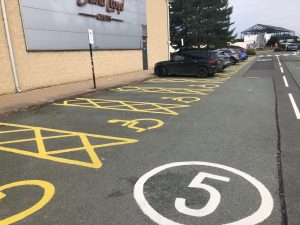
Faded road markings can make junctions, parking bays and pedestrian routes harder to identify.
In busy commercial environments, poor visibility may contribute to confusion about where vehicles should travel or where people are expected to walk.
Common warning signs include:
- Fading: Colours have lost their original visibility.
- Patchy Coverage: Sections of the original marking have worn away.
- Poor Contrast: Markings are difficult to distinguish from the surrounding surface.
- Heavy Wear: Frequent vehicle movements have damaged high-traffic areas.
If the layout remains suitable and the surface is sound, repainting may be the most practical solution.
For further guidance, read our article on when to repaint line markings.
2. The Existing Layout No Longer Works
A layout that worked several years ago may no longer suit how a site operates.
Businesses change their parking arrangements, warehouses introduce new equipment and commercial premises adapt to different traffic patterns.
Examples include:
- Parking Areas: Reconfigured bays, entrances or one-way systems.
- Warehouses: New racking arrangements, forklift routes or pedestrian walkways.
- Industrial Yards: Changes to loading areas and delivery vehicle access.
- Commercial Premises: New access routes or designated operational zones.
Where the original markings conflict with the revised layout, applying new markings alongside them can create unnecessary confusion.
Taking away obsolete markings first allows the updated arrangement to be easier to understand.
3. Multiple Markings Are Overlapping
One of the clearest signs that a site needs attention is the presence of several different layouts on the same surface.
This can happen when new markings are painted over older ones without adequately dealing with the original design.
Over time, the older markings may remain visible or begin showing through the newer coating.
The result can be particularly confusing around:
- Directional Arrows: Where different markings indicate conflicting movements.
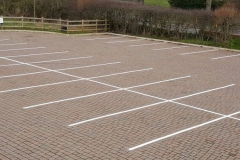
- Parking Bays: Where previous bay boundaries remain visible.
- Pedestrian Routes: Where old and new walkways intersect.
- Warehouse Zones: Where outdated boundaries conflict with current operations.
In these situations, professional line marking removal may be appropriate before applying the revised layout.
4. The Surface Is Cracked, Damaged or Deteriorating
Sometimes, the problem is not simply the marking material.
Cracked tarmac, damaged concrete, loose coatings or deteriorating surfaces can affect how well new markings adhere.
Painting directly onto an unsuitable surface may lead to premature failure.
Before renewing the markings, it is important to consider whether the underlying area requires repairs or additional surface preparation.
This is especially relevant for industrial floors, external yards and frequently used vehicle routes.
5. The Space Is Being Adapted for a New Purpose
New operational requirements often mean existing markings need to change.
For example, a business may introduce electric vehicle charging facilities, designate additional pedestrian routes or reorganise its loading arrangements.
A revised layout should account for the space available, expected movements and the people using the site.
Our EV charging bay markings guide explains some of the planning considerations involved when adapting existing parking facilities.
Can You Simply Paint Over Old Line Markings?
In some circumstances, yes. However, painting over existing markings is not always the best option.
Where the original layout is unchanged, the existing material is sound and the new coating is compatible, refreshing the markings may be suitable.
Problems can arise when a different design is introduced or the underlying material is already failing.
Painting over unsuitable markings may lead to:
- Visible Ghost Markings: Older shapes or boundaries remain noticeable.
- Confusing Layouts: Previous and current instructions appear together.
- Poor Adhesion: New coatings fail to bond effectively.
- Uneven Finishes: Existing material creates raised or inconsistent areas.
- Additional Maintenance: The updated markings deteriorate sooner than expected.
Before applying new markings, the existing coating and surface condition should be assessed.
This helps determine whether repainting, preparation or a more comprehensive treatment is appropriate.
How Does Professional Line Marking Removal Work?
The process depends on the marking material, the underlying surface and the required finish.
Different techniques may be considered for asphalt, concrete and coated industrial floors.
Assessing the Existing Surface
The first step is to understand what is already in place.
Important considerations include the type and thickness of the marking material, the condition of the substrate and whether the site needs to remain operational during the work.
The assessment also helps identify areas where the surface could be damaged by an unsuitable treatment.
Choosing an Appropriate Method
Specialist techniques can include mechanical abrasion, grinding or controlled water-based treatments, depending on the surface and project requirements.
Each method has advantages and limitations.
For example, mechanical treatments may alter the surface texture, while water-based processes require consideration of drainage, wastewater management and surrounding equipment.
The aim is to address unwanted markings without causing unnecessary damage to the underlying area.
Some methods can also leave a visible difference in surface colour or texture, particularly where the surrounding material has weathered.
Preparing for the Updated Layout
Once the obsolete markings have been dealt with, the surface must be suitable for the next stage.
This may involve checking for residual material, moisture, loose debris or existing defects.
The new layout can then be measured and set out according to the agreed design.
Our road marking services cover a range of applications where accurate positioning and suitable materials are important.
When Do Warehouse Floor Markings Need Updating?
Warehouse floor markings support the organisation of pedestrian routes, forklift movements, storage areas and operational zones.
As warehouse layouts evolve, existing markings can become inaccurate even when they remain highly visible.
For example, introducing new racking may change the available travel routes. Relocating packing stations may also affect pedestrian access or designated working areas.
Site managers should review markings when:
- Forklift Routes Change: Existing travel paths no longer reflect current operations.
- Storage Layouts Change: New racking or equipment affects designated areas.
- Pedestrian Walkways Move: Staff need different routes through the building.
- Safety Zones Become Worn: Important boundaries are difficult to identify.
- Operational Areas Expand: Additional working or loading zones are introduced.
Where old markings conflict with current arrangements, a revised layout can help communicate how the space is intended to operate.
The Health and Safety Executive provides guidance on workplace transport safety, including the importance of managing pedestrian and vehicle movements.
For production environments, explore our factory floor marking services.
What About Road and Parking Area Markings?
External markings face different challenges from those found inside buildings.
Weather, traffic volumes, surface wear and changes in site access can all affect their condition.
Roads and Access Routes
Road markings help communicate directions, boundaries and other important information to drivers.
Where markings are significantly worn or an arrangement is being redesigned, the appropriate treatment depends on the road type and applicable requirements.
For public roads, the Department for Transport’s Traffic Signs Manual provides relevant guidance on the use and design of traffic signs and markings.
Private roads and commercial premises may have different considerations, so the site and its intended use should always be assessed individually.
Parking Bays and Commercial Sites
Parking layouts frequently need updating as businesses expand or adapt their facilities.
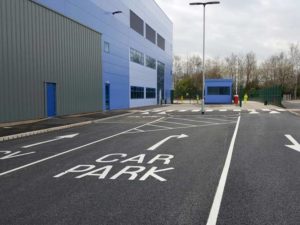
A site may require different bay dimensions, revised directional arrows, accessible parking arrangements or dedicated EV charging spaces.
When older boundaries remain visible, they can make the new arrangement harder for visitors to understand.
Our car park marking services can help businesses plan suitable markings for their premises.
What Should Happen Before New Markings Are Applied?
Effective surface preparation is an important part of any remarking project.
Before application, several practical checks should be considered.
- Surface Condition: Check for cracks, loose material and areas requiring repair.
- Existing Coatings: Assess compatibility with the proposed marking system.
- Moisture: Confirm that conditions are suitable for the selected material.
- Layout Accuracy: Agree the required dimensions, boundaries and directional information.
- Site Access: Plan how pedestrians, vehicles and equipment will be managed during the work.
- Application Conditions: Consider temperature, weather and the manufacturer’s requirements.
These checks help reduce the risk of avoidable problems and support a more consistent finished result.
How Can You Avoid Unnecessary Line Marking Costs?
Addressing marking problems early can help prevent repeated work and unnecessary disruption.
For example, repainting an outdated layout shortly before a planned site redesign could mean paying for work that quickly becomes redundant.
A more practical approach is to review upcoming operational changes before arranging maintenance.
Consider whether the site will soon require new parking spaces, revised traffic movements, additional equipment or resurfacing.
Where resurfacing is already planned, coordinating the marking work with that programme can help avoid duplicated effort.
Read our guide to line markings after resurfacing for further information.
Need Advice About Your Existing Line Markings?
Whether your site has faded road markings, outdated parking bays or confusing warehouse boundaries, choosing the right treatment starts with understanding the existing surface and the layout you need.
At Gilvar Lining Ltd, we provide professional line marking services for commercial, industrial and public-sector environments.
Established in 1987 and based in Burton-on-Trent, we support businesses and organisations with practical marking solutions suited to their sites.
If you are planning to update an existing layout, we can discuss the condition of your markings and the requirements of the proposed work.
Contact Gilvar Lining Ltd for a quotation and tell us about your project.


