
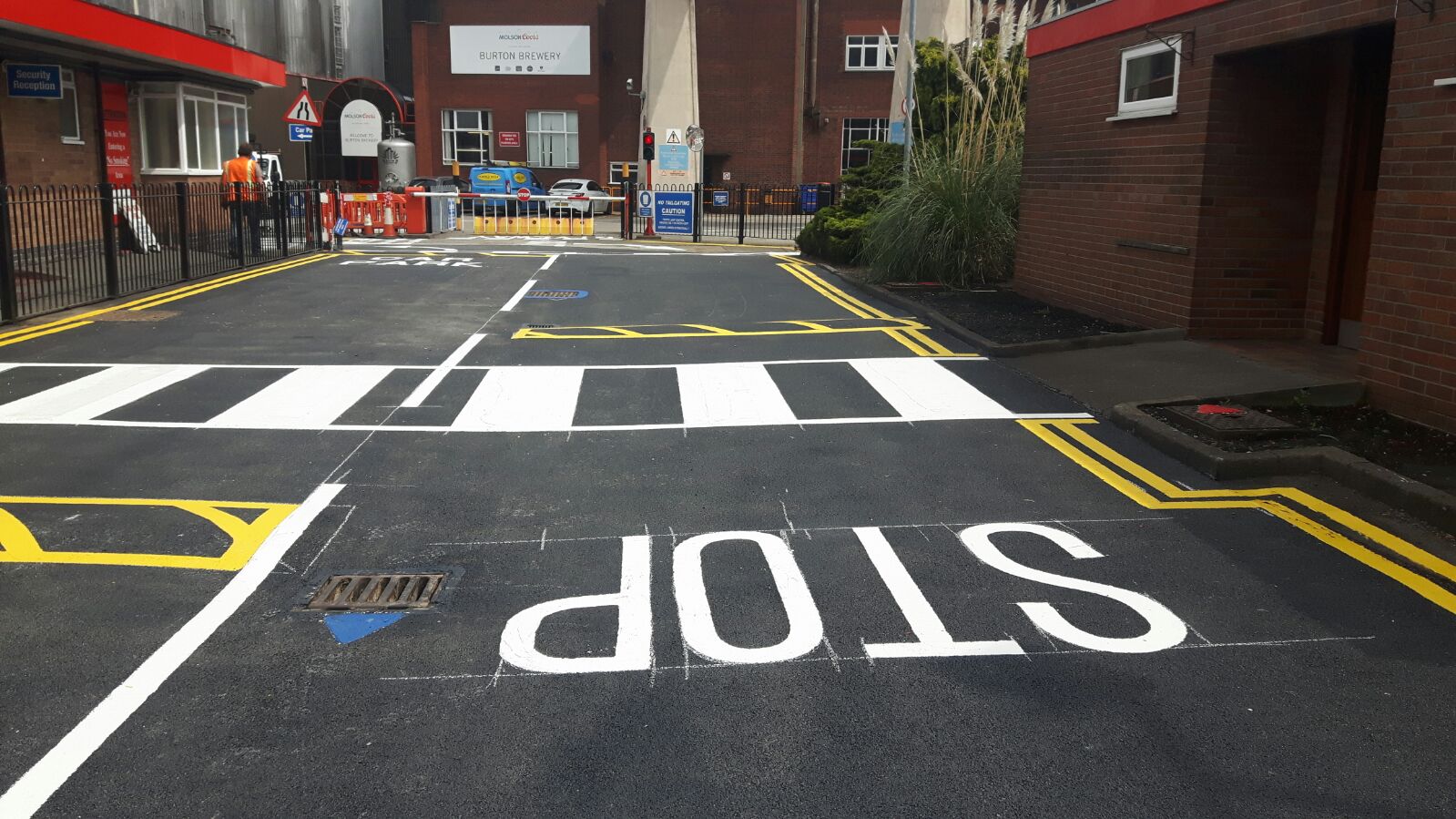
UK road marking colours are designed to communicate clear instructions to drivers, pedestrians, and site operators. Understanding road marking colour meanings is essential for safety, compliance, and efficient traffic flow across roads, car parks, and industrial environments.
In this guide, we explain what different road marking colours in the UK represent, including white road markings, yellow road markings, and specialist colours used in car parks and commercial settings. Whether you manage a site or simply want to understand the rules of the road, this article breaks everything down clearly.
Why Do Road Marking Colours Matter in the UK?
Road marking colours are not random. Each colour is used to signal specific rules, restrictions, or guidance.
Key Reasons Colours Are Used
- To improve visibility and driver awareness
- To separate traffic flows and reduce accidents
- To highlight restrictions such as parking controls
- To guide pedestrians safely through busy environments
In commercial environments such as warehouses and car parks, colour-coded markings also help organise movement and reduce risk.
If you are planning a project, you can explore professional applications through line marking services.
What Do White Road Markings Mean in the UK?
White road markings are the most common type used across UK roads. They are primarily used to guide traffic and define lanes.
Common White Road Markings
- Centre lines separating traffic directions
- Lane dividers on multi-lane roads
- Stop lines at junctions and crossings
- Edge lines marking road boundaries
What White Markings Indicate
White markings generally provide guidance rather than restrictions. However, some carry legal weight, such as stop lines or solid lane markings.
Solid vs Broken White Lines
- Broken white lines, you can cross when safe
- Solid white lines, crossing is restricted unless necessary
White road markings are essential for maintaining traffic flow and preventing collisions.
What Do Yellow Road Markings Mean in the UK?
Yellow road markings in the UK are used to indicate parking and waiting restrictions.
Single Yellow Lines
Single yellow lines mean parking is restricted during certain hours. Time restrictions are usually displayed on nearby signs.
Double Yellow Lines
Double yellow lines mean no waiting at any time. This applies regardless of time of day, unless exemptions apply.
Yellow Box Junctions
These markings indicate that vehicles must not stop within the box unless their exit is clear.
Curb Markings
Short yellow lines on curbs indicate loading restrictions, often used in busy commercial areas.
Yellow road markings are critical for keeping traffic moving and preventing congestion.
What Colours Are Used in Car Park Line Marking?
Car park line marking colours vary depending on the purpose of the space and the type of site.
Common Car Park Line Marking Colours
- White, standard parking bays
- Yellow, restricted or controlled areas
- Blue, disabled parking spaces
- Red, emergency routes or fire access
- Green, electric vehicle bays
Why Colour Coding Matters in Car Parks
Colour-coded markings help drivers quickly understand how spaces are used. This improves safety and reduces confusion, especially in high-traffic environments.
For professional application, see our line marking services.
What Colours Are Used in Warehouse and Industrial Markings?
In warehouses and industrial settings, colour coding plays a major role in health and safety.
Typical Industrial Colour Uses
- Yellow, hazard zones and caution areas
- Red, fire equipment and emergency zones
- Green, safe routes and exits
- Blue, mandatory instructions or PPE areas
These markings are often required as part of workplace safety compliance.
Are UK Road Marking Colours Legally Enforced?
Yes, many road marking colours are backed by UK law and regulations.
Road markings must comply with:
- Traffic Signs Regulations and General Directions (TSRGD)
- Chapter 8 of the Traffic Signs Manual
- BS EN 1436 performance standards
You can read official guidance here:
Failure to follow these markings can result in penalties or safety risks.
How Do Road Marking Colours Improve Safety?
Road marking colours are designed to be instantly recognisable.
Safety Benefits
- Reduce driver confusion
- Improve visibility in poor conditions
- Prevent unsafe parking or stopping
- Guide pedestrians safely
In commercial environments, clear markings also reduce workplace accidents and improve operational efficiency.
How Are Road Marking Colours Applied Professionally?
Applying road marking colours correctly requires more than just paint.
Key Factors in Professional Application
- Surface preparation for proper adhesion
- Selection of durable materials such as thermoplastic or MMA
- Correct thickness and reflectivity levels
- Compliance with UK standards
To understand how projects are delivered, visit our frequently asked questions.
When Should Road Markings Be Refreshed or Replaced?
Over time, road marking colours can fade or wear away.
Signs You Need New Markings
- Lines are faded or difficult to see
- Layout no longer suits traffic flow
- Changes in regulations require updates
- Surface damage affects visibility
Regular maintenance ensures continued safety and compliance.
Can You Customise Road Marking Colours for Your Site?
Yes, in private and commercial environments, markings can be adapted to suit your site.
Custom Marking Options
- Branded colours or logos
- Custom layouts for traffic flow
- Specialist safety zones
However, any markings that affect public access must still follow UK regulations.
To learn more about our experience, visit our About Us page.
Frequently Asked Questions About UK Road Marking Colours
What do white road markings mean in the UK?
White markings guide traffic and define lanes, helping drivers stay within correct boundaries.
What do yellow road markings mean in the UK?
Yellow markings indicate parking and waiting restrictions, including single and double yellow lines.
What colour are disabled parking bays?
Disabled bays are typically marked in blue to clearly identify accessible parking spaces.
Are road marking colours the same across the UK?
Yes, they follow national standards to ensure consistency and safety.
Need Professional Line Marking for Your Site?
Understanding UK road marking colours is important, but applying them correctly is what ensures safety and compliance.
If you need expert help with car park markings, warehouse layouts, or road marking projects, Gilvar Lining Ltd can help.
Book your site visit today and get expert advice on the right markings for your environment.
Call now or get your free quote today


